
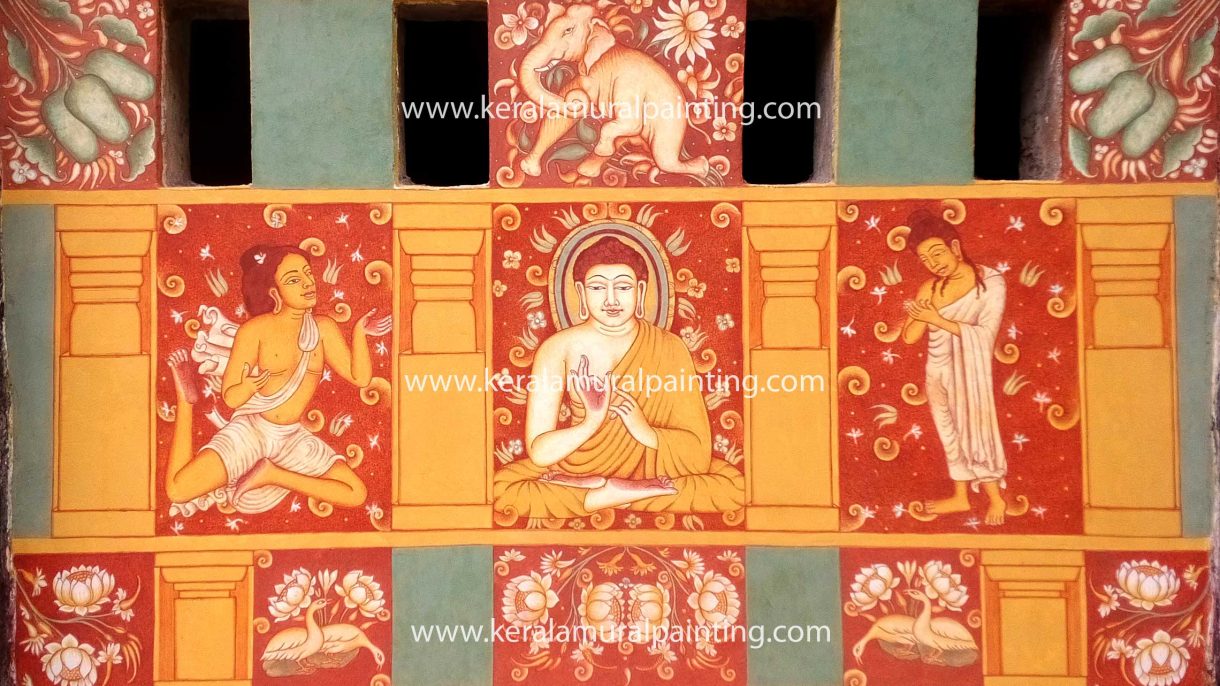
Discover the story behind the Sri Buddha mural painting at the iconic Black House in Visva-Bharati University, West Bengal. Created in natural colour fresco style, this Kerala mural art celebrates tradition, spirituality, and heritage.
Introduction
The Black House at Visva-Bharati University, Santiniketan is not just a historic building—it is a cultural landmark founded by Rabindranath Tagore himself. Known for its distinctive mud and coal-tar walls, the Black House has been a living gallery for mural artists for decades. In 2016, I had the honor of painting a Sri Buddha mural on its walls, bringing together the spiritual essence of Lord Buddha and the timeless beauty of Kerala mural painting traditions.
About the Black House in Santiniketan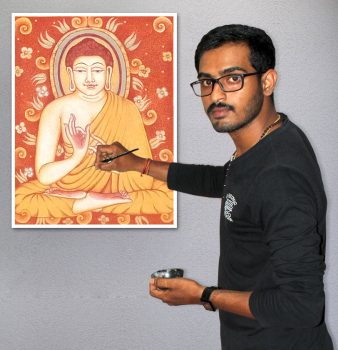
The Black House holds an irreplaceable place in the history of Bengal art and culture. Over the years, students and renowned artists have adorned its walls with intricate murals, turning it into a heritage site for Indian mural art. Adding to this legacy, my work, the Sri Buddha mural painting, became part of its artistic narrative.
Sri Buddha Mural Painting: Concept and Style
The mural, measuring 5 x 4 feet, was created using the natural colour fresco technique, which is traditional to Kerala mural painting. At its center is Lord Buddha, depicted in deep meditation, surrounded by disciples, symbolic floral patterns, and geometric borders.
Key elements of the mural include:
- Traditional Kerala mural style with flowing lines and earthy tones
- Natural pigments to achieve long-lasting vibrancy
- Symbolic motifs representing peace, enlightenment, and spiritual growth.
- This mural blends the serenity of Buddha’s teachings with the aesthetic richness of Indian mural art, creating harmony between tradition and creativity.
Challenges and Inspirations
Painting on the historic Black House walls came with unique challenges. The textured surface demanded meticulous preparation and a careful approach to detail. Yet, this experience provided an opportunity to blend centuries-old Kerala mural techniques with the cultural spirit of Santiniketan’s artistic heritage.
A Lasting Artistic Legacy
Today, the Sri Buddha mural stands as a part of the Black House’s legacy—offering visitors a glimpse into the union of Bengal’s cultural heritage and Kerala’s mural painting traditions. It is my humble contribution to the artistic journey of Visva-Bharati University, inspiring future generations to explore India’s diverse mural art forms.
Historical Significance of Black House Murals
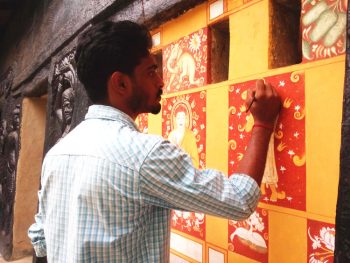
The Black House murals are an integral part of the artistic heritage of Santiniketan. Over the decades, students and artists from across India have contributed to these walls, making them a visual archive of creativity and culture. Every mural tells a story—some depicting Indian mythology, others exploring nature, spirituality, and human emotions. By painting the Sri Buddha mural, I felt connected to generations of artists who left their imprint on this historic building.
Symbolism Behind the Sri Buddha Mural
- The Sri Buddha mural painting is not only an artwork but also a spiritual expression.
- The central figure, Lord Buddha, represents peace, compassion, and enlightenment.
- The lotus motifs symbolize purity and spiritual awakening.
- The disciples and celestial elements around Buddha portray wisdom flowing through generations.
- This symbolism aligns with the philosophy of Santiniketan, where Tagore envisioned education as a blend of art, nature, and humanity.
Techniques Used in the Mural
The mural was created using the Kerala mural painting style, a tradition that dates back to ancient temple art in Kerala.
Key techniques include:
- Natural Pigments: Made from minerals and plants, giving the mural its earthy tones.
- Fresco Method: Painting on fresh lime plaster so the colors bond with the wall surface.
- Intricate Linework: Adding depth, movement, and character to the figures.
- This technique ensures the artwork lasts for decades, even in open spaces like the Black House.
Personal Reflections as the Artist
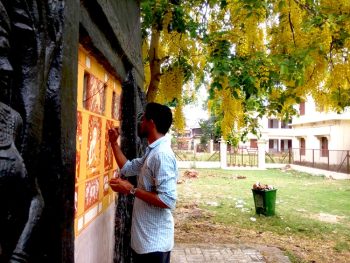
Creating this mural was a transformative journey for me. Working at Santiniketan, surrounded by Tagore’s legacy and the energy of countless artists, was humbling and inspiring. Each brushstroke felt like a dialogue between tradition and modernity, connecting Kerala’s mural techniques with Bengal’s cultural landscape.
Visitor Experience & Cultural Tourism Angle
For visitors, the Black House murals—including the Sri Buddha mural—are a must-see attraction in Santiniketan. Art lovers, students, and travelers can explore not only the paintings but also the open-air classrooms, Tagore’s Ashram, and art galleries nearby.