
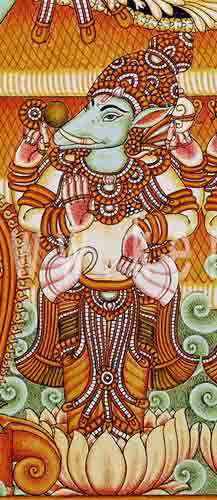
The Varaha avatar is the third incarnation of Lord Vishnu and one of the profound and powerful forms among the Dashavatara. During the Satya Yuga, when the demon king Hiranyaksha abducted Mother Earth (Bhudevi) and hid her in the cosmic ocean, the balance of the universe was gravely threatened. To rescue Bhudevi and restore cosmic order, Lord Vishnu descended as Varaha, a mighty boar with great strength and determination.
In a majestic battle that raged deep in the cosmic ocean, Varaha defeated the demon Hiranyaksha, showcasing divine power and will. Using his tusks, he lifted the submerged Earth from the depths of the ocean back to its rightful place in the cosmos, symbolizing the uplifting of the world from chaos and darkness. The victory was celebrated with the Ananta-Vishnu-Nritya, a cosmic dance of triumph and restoration.
Symbolism and Teachings from the Varaha Avatar
Victory of Good over Evil: Varaha signifies the triumph of righteousness (dharma) over destructive forces (adharma), portraying the divine intervention needed to maintain balance in the universe.
Protector of the Earth and Environment: The avatar emphasizes the sacredness of the Earth and the importance of protecting the environment. It reminds devotees of their duty to safeguard the natural world.
Divine Adaptability and Strength: Taking the form of a boar, Varaha represents divine intelligence adapting to the situation at hand. The boar, an animal capable of thriving in the mud and water, symbolizes rooted strength, determination, and the power to delve into depths to rescue and restore.
Symbol of Sacrifice and Royal Responsibility: Varaha is linked to yajna (sacrifice), ritual acts that uphold cosmic order. His image is also an ideal for kingship, embodying strength, protection, and the responsibility of rulers to protect their people and uphold justice.
Cosmic Order and Restoration: The avatar’s act of lifting the Earth reinforces the idea that the divine sustains and nurtures creation, ensuring the world’s continued existence and harmony.
Iconography and Cultural Significance
In art and sculpture, Varaha avatar is often depicted either as a full boar or in an anthropomorphic form with a boar’s head and a human body, carrying Mother Earth on his tusks. This image is one of the most enduring and majestic among Hindu iconography, symbolizing divine protection and stability.
Temples dedicated to Varaha, especially in South and Northeast India, celebrate this avatar’s power and role in cosmic restoration. Varaha Jayanti, the day commemorating this incarnation, is observed with devotion by many.
The Varaha avatar’s story and symbolism inspire devotees to embody strength, protection, humility, and the commitment to restore balance in their own lives and the world around them. It stands as a profound reminder that divine power can take any form necessary to preserve dharma and uphold the welfare of the universe.