
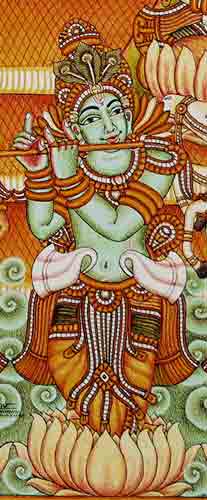
The Krishna avatar is one of the most celebrated incarnations of Lord Vishnu, who descends to earth whenever evil threatens to overpower good. As the eighth avatar of Vishnu, Krishna’s life was a divine blend of wisdom, love, playfulness, and power. Born in a time of great turmoil, He served as a divine force to restore dharma (righteousness) and protect humanity.
Birth and Early Life: A Prophecy Fulfilled
The story of the Krishna avatar begins in Mathura, where a tyrannical king, Kamsa, ruled with cruelty and fear. A prophecy warned him that the eighth child of his sister Devaki would be his doom. To prevent this, Kamsa imprisoned Devaki and her husband Vasudeva, killing their first seven children. But when Krishna was born, divine intervention helped Vasudeva escape and deliver the infant safely to Vrindavan, where he was raised by Nanda and Yashoda.
Even as a child, Krishna avatar demonstrated extraordinary powers—killing demons like Putana, Trinavarta, and Kaliya, all of whom were sent by Kamsa to eliminate him. Despite these threats, Krishna grew up spreading joy with his mischief, music, and divine charm. His childhood stories, including the famous tales of stealing butter and enchanting the Gopis, remain beloved across generations.
Krishna Avatar and the Fall of Kamsa
As foretold, the Krishna avatar eventually returned to Mathura to confront his evil uncle. In a fierce battle, Krishna defeated Kamsa, ending his reign of terror and freeing his biological parents. This moment marked the fulfillment of divine prophecy and the beginning of Krishna’s role in shaping the destiny of ancient India.
Krishna Avatar in the Mahabharata: The Philosopher-King
The influence of Krishna avatar reaches its peak during the events of the Mahabharata, where he became the spiritual and political guide for the Pandavas. Acting as Arjuna’s charioteer, Krishna offered wisdom rather than weapons. On the battlefield of Kurukshetra, he delivered the Bhagavad Gita, a sacred conversation that explores profound themes such as:
Duty and righteousness (Dharma)
Selfless action (Karma Yoga)
Devotion and surrender (Bhakti Yoga)
The eternal nature of the soul (Atman)
These teachings, part of the Krishna avatar’s divine mission, remain relevant today for anyone seeking clarity in the face of moral and emotional struggles.
The Spiritual Symbolism
Beyond his heroic deeds, Krishna avatar symbolizes the divine love between the soul and the Supreme. His enchanting relationship with Radha, and his ability to draw all living beings to himself through the music of his flute, reflect the inner longing of the soul to unite with the divine.
In every stage of his life—from playful child to wise teacher—He embodied a perfect balance between earthly presence and divine transcendence.
Cultural Influence and Devotional Legacy
The stories of Krishna avatar have shaped Indian art, music, literature, and devotional practices for thousands of years. Festivals like Janmashtami, celebrating his birth, are marked with joy, dance, and reenactments of his life. Temples in Mathura, Vrindavan, and Dwarka stand as living monuments to his legacy, drawing millions of devotees each year.
Through songs, scriptures, and storytelling traditions, He continues to inspire not just Hindus but spiritual seekers around the world.
Conclusion: The Eternal Guide
The Krishna avatar is not just a divine tale of the past—it is a living example of how to walk the path of truth with courage, joy, and compassion. His teachings, especially from the Bhagavad Gita, continue to guide humanity toward a life of purpose, balance, and inner freedom. Whether as a playful cowherd, a fierce protector, or a wise spiritual guide, He remains one of the most loved and revered manifestations of the Divine in all of Hinduism.