
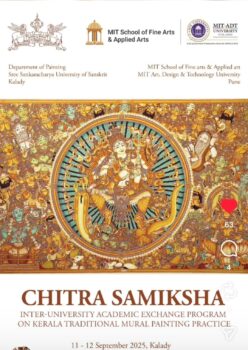
Kerala mural painting dates back centuries and is deeply rooted in Indian mythology, temple culture, and classical artistic philosophy. These murals are more than just decorative — they are visual scriptures shaped by stringent traditional methods, natural pigments, and symbolic geometry. They carry the aesthetics and spiritual thinking of ancient India, presented through iconic figures, chromatic harmony, and rhythmic compositions. �
Wikipedia
The Chitra Samiksha workshop served as both a learning platform and an academic dialogue — a space where students and practitioners engaged with the theory, technique, and relevance of mural painting in today’s world.
What Made This Workshop Special
🖌 Inter-University Exchange: Participants from different institutions were able to share their research findings, artistic experiences, and creative methodologies, fostering a community of thoughtful practice around mural art.
📚 Academic Engagement: Beyond hands-on painting, sessions included discussions on history, cultural context, materials, and the evolution of traditional techniques. This helped participants connect intellectually with the art form, not just visually.
🎨 Traditional Techniques: From preparing the surface and working with natural colours to understanding proportion, narrative structure, and mythological symbolism — the workshop emphasized authenticity and respect for centuries-old processes. �
Wikipedia
🤝 Community and Collaboration: The atmosphere was one of mutual encouragement — artists exchanged insights, students found mentorship, and everyone deepened their appreciation for Kerala’s mural legacy.
Highlights from the Event
(Here you can insert photos and captions — e.g., keynote speakers, hands-on painting progress, group discussions, closeups of student work, etc.)
Opening Ceremony: A warm welcome by faculty and invited mural artists.
Live Demonstrations: Traditional colour preparation and brushwork techniques shown step-by-step.
Interactive Sessions: Q&A sessions where participants asked questions and received constructive feedback.
Participant Works: Emerging mural pieces from attendees displaying creativity grounded in tradition.
Why Workshops Like This Matter
Traditional art forms often live at the intersection of craft, culture, and collective memory. Workshops like Chitra Samiksha are vital because they:
Preserve and pass on intricate technical knowledge from mentors to students.
Encourage younger generations to connect with their cultural heritage creatively.
Expand the conversation around traditional arts in academic and artistic circles.
Create opportunities for emerging artists to build networks and portfolios.
Looking Ahead
As traditional mural painting continues to enchant art enthusiasts worldwide, platforms like Chitra Samiksha affirm that ancient art forms still have relevance and vibrancy today. Whether one is a beginner looking to learn basics or an experienced artist seeking deeper scholarly exchange, this workshop model proves that art education thrives where practice meets reflection and community engagement.
Visual Documentation
(Insert workshop photographs here — live demonstrations, participant works, discussions, and group interactions.)
These visuals capture the dedication, concentration, and shared enthusiasm that defined the workshop experience.
Significance of Chitra Samiksha
Programs like Chitra Samiksha play a crucial role in sustaining traditional art forms by:
Encouraging academic engagement with heritage arts
Providing platforms for skill transmission and mentorship
Building networks among students, artists, and institutions
Reinforcing the relevance of traditional mural painting in contemporary art education
Conclusion
The Chitra Samiksha workshop stood as a thoughtful initiative that honored Kerala’s mural painting tradition while encouraging critical reflection and artistic growth. With strong academic support and dedicated coordination by artist Vishnu Vikraman, the program successfully created a space where tradition was not only preserved but actively experienced and discussed.