
Nestled in the rugged landscapes of Karnataka, Hampi stands as a sublime testament to India’s royal and artistic past. Known for the Mural Paintings of Hampi and its grand temples, it was once the thriving capital of the Vijayanagara Empire (14th–16th centuries). Hampi’s ruins still evoke awe with pillared halls, monolithic sculptures, sacred tanks, bazaars, and intricate carvings. Its dramatic terrain, with rocky hills punctuated by boulders and river flows, gives the place a surreal, otherworldly charm. Beyond its architectural grandeur, Hampi whispers stories of arts, faith, and creative expression that blend stone, sculpt, and, in rare corners, mural art.
Walking through its ruins, one senses the ambitions of kings, the devotion of artisans, and the interplay between light, shadow, stone, and narrative. Hampi was built not merely to impress. It was meant to inspire, to teach, and to reflect the cosmos in earthly form.
Mural Paintings of Hampi: Hidden Art in Stone Shadows
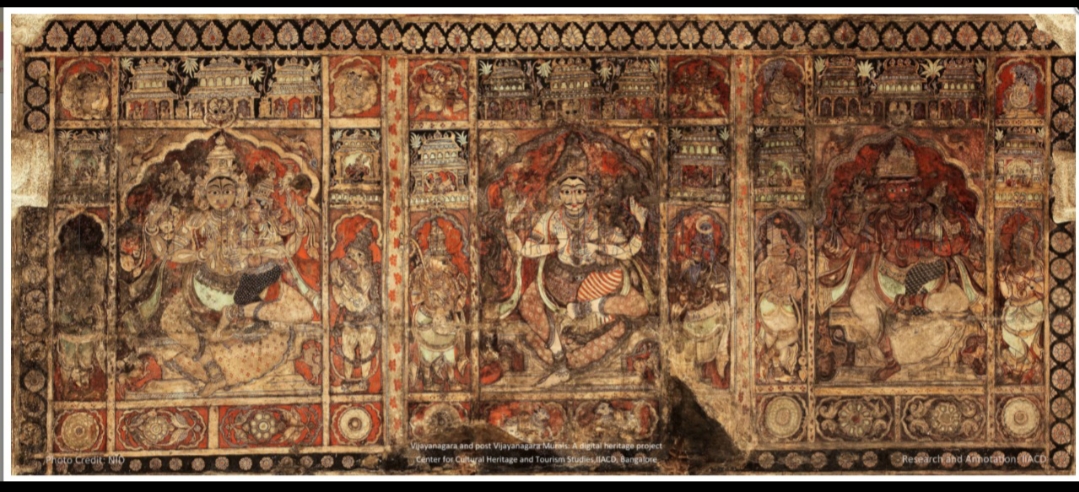
While Hampi is best known for its stonework, pillars, and carved reliefs, traces of mural paintings persist in some temple sanctums and old chambers. These murals, though faded, still hint at vibrant storytelling with scenes from Ramayana, Mahabharata, and the dance of gods and demons set within decorative frames. In rare shelters or less exposed walls, pigment remnants — ochre reds, muted greens, and earth tones — can still be discerned, especially where the plaster survived.
These Mural Paintings of Hampi would have complemented the sculptural narrative, filling temple interiors with color, life, and spiritual atmosphere. Their role was not merely decorative. They made sacred stories accessible to worshipers while reinforcing religious education, mythic memory, and devotion. The surviving traces call for imagination, as layers over time peeled away due to rain, war, and reconstruction, leaving us with whispers of an artistry once bold and bright.
Modern scholars and restoration efforts occasionally unearth bits of painted plaster behind stone screens, giving glimpses into the full palette once used. Though not as profuse as in mural-rich regions, the presence of painted narratives in Hampi bridges stone and color, sculpture and story.
Architecture, Sculpture & Spiritual Design
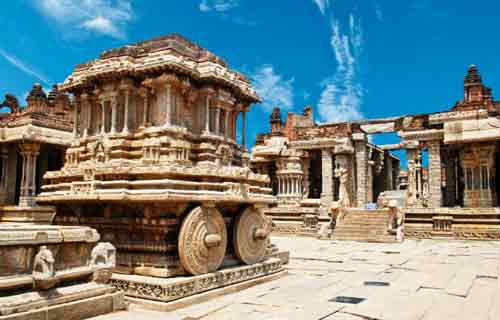
Hampi’s architectural marvels are legends in stone. The Virupaksha Temple, with its towering gopuram, corridors of pillars, and riverfront location, remains an active worship center. The Vitthala Temple, famous for its stone chariot and musical pillars, showcases architectural play, with columns that produce musical notes, exquisite reliefs of dancers, gods, animals, and scenes from myth. The integration of water tanks, mandapas (pavilions), pillared halls, and sacred enclosures reflects a holistic spatial vision. Architecture here served ritual, community gathering, and cosmic alignment.
Every surface in Hampi is sculpted with friezes of yali (mythical beasts), processions, deities, flora, geometric patterns, and celestial beings. The play of sunlight — morning rays and shifting shadows — transforms these surfaces throughout the day, giving the impression that the stones are alive, speaking their stories as the sun moves.
Preservation, Revival & Visitor Perspective
Over centuries, Hampi suffered invasions, earthquakes, natural wear, and neglect. Some murals and painted plaster were lost or overlaid, and many sculptures became derelict. Yet with its UNESCO World Heritage status, careful conservation is ongoing. Archaeologists and restoration experts prioritize structural reinforcement, careful stone cleaning, and decoding remnants of pigment wherever they appear.
Visitors today walk among ruins and imagine life in Vijayanagara’s golden age. Local guides share myths, architectural features, and hidden mural fragments. Early morning or late afternoons are the best times to explore, as soft light accentuates textures and brings depth to carvings. Bringing a sketchbook, a camera (without flash in fragile interiors), and patience is rewarding. When you pause in a quiet mandapa, you begin to sense the human stories existing in stone and paint.
Conclusion: Hampi as a Living Canvas
Mural Paintings of Hampi remains a living canvas, where stone, space, and faint traces of paint converge toward a singular aim: to teach, to inspire, and to lift the spirit. The mural paintings of Hampi, those subtle hints of color behind stone, remind us of a lost artscape once vivid and potent. Its majestic temples, rhythmic stone carvings, and spiritual layout continue to mesmerize. Walking its courtyards and halls invites visitors not just to glimpse history but to dwell in it, listening to the silence between sculptures, and imagining the murals that once sang in color.