
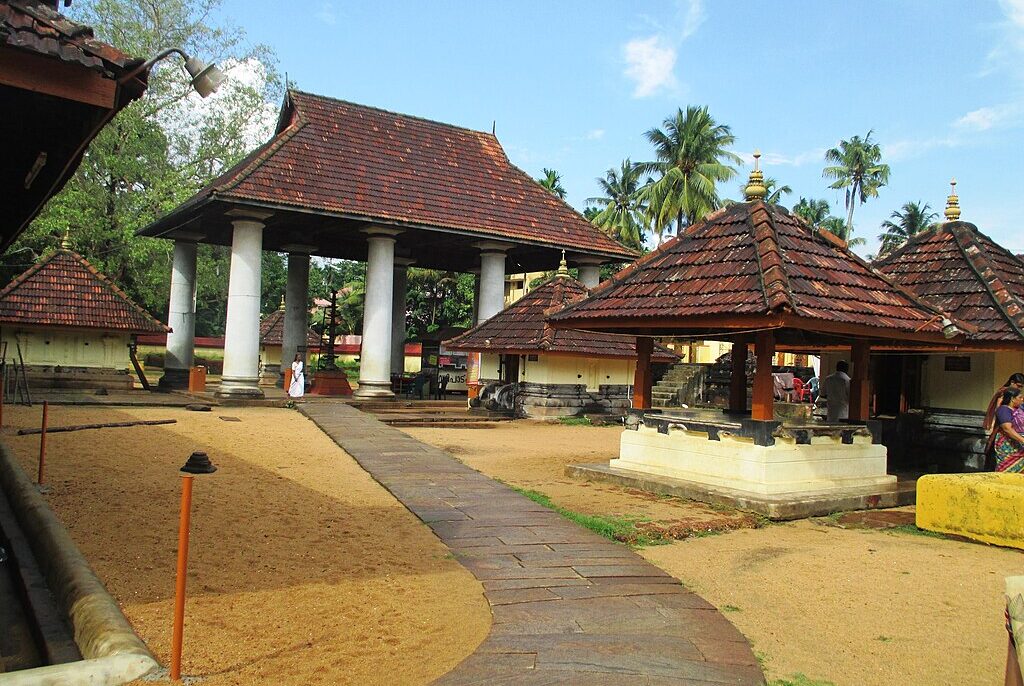
The Thiruvanchikulam Siva Temple (also known as the medieval Thiruvanchaikkalam Temple) is a phenomenal Hindu temple situated in Kodungallur, within the Thrissur district of the South Indian state of Kerala. More than just a place of worship, it stands as a testament to the profound spiritual history and architectural genius of the region. Constructed firmly in the distinctive Kerala style of architecture, the temple is believed to have been established during the zenith of the Chera period in the 8th century, making it one of the most ancient and historically significant shrines in the entire South of India.
The principal deity revered here is Shiva, worshipped in his powerful form as Mahadeva, accompanied by his divine consort Parvathi, who is worshipped as Umadevi. This temple holds a unique and elevated place in the Hindu pantheon because of its profound antiquity and scriptural mention.
The Majestic Architecture and Divine Art
Like many temples of the Kerala school, Thiruvanchikulam Siva Temple showcases a tranquil yet robust architectural style, characterized by a sloping copper-plated roof, intricate wood carvings, and a harmonious integration with the natural surroundings. The central shrine, or Sreekovil, is surrounded by a circular Chuttambalam (outer enclosure), giving it the classic look of a fortress of faith. The entire complex is a protected monument under the Archaeological Survey of India (ASI), a designation earned due to its sheer historical value and the artistic treasures it houses.
Foremost among these treasures are the temple’s magnificent mural paintings. The walls of the temple are adorned with what are referred to as “very good mural paintings.” These frescoes are executed in the classic Kerala Mural Art style, which is known for its vibrant mineral and vegetable pigments, deep symbolic meaning, and a distinct aesthetic that differs from the Chola or Vijayanagara styles. The murals predominantly depict scenes and characters from Hindu epics—the Ramayana and Mahabharata—as well as various forms of Shiva, Parvathi, and other minor deities. For a scholar or devotee of Kerala’s art, the intricate detail and preservation of these ancient paintings at Thiruvanchikulam Siva Temple offer an unparalleled glimpse into the artistic patronage of the Chera and post-Chera eras. The very existence of this site is a celebration of the intersection between devotion and visual storytelling.
A Paadal Petra Sthalam: The Spiritual Legacy of Thiruvanchikulam Siva Temple
The true spiritual resonance of this temple is affirmed by its mention in the 7th-century Tamil Saiva canonical work, the Tevaram. The presiding deity is profoundly revered in the hymns written by the celebrated Tamil saint-poets, the Nayanmars. Consequently, the temple is classified as a Paadal Petra Sthalam, a category comprising 276 temples that find mention in the canon. Remarkably, the Thiruvanchikulam Siva Temple is the only temple in all of Kerala to feature on this prestigious list, underscoring its pivotal role in the early development of Saivism across South India.
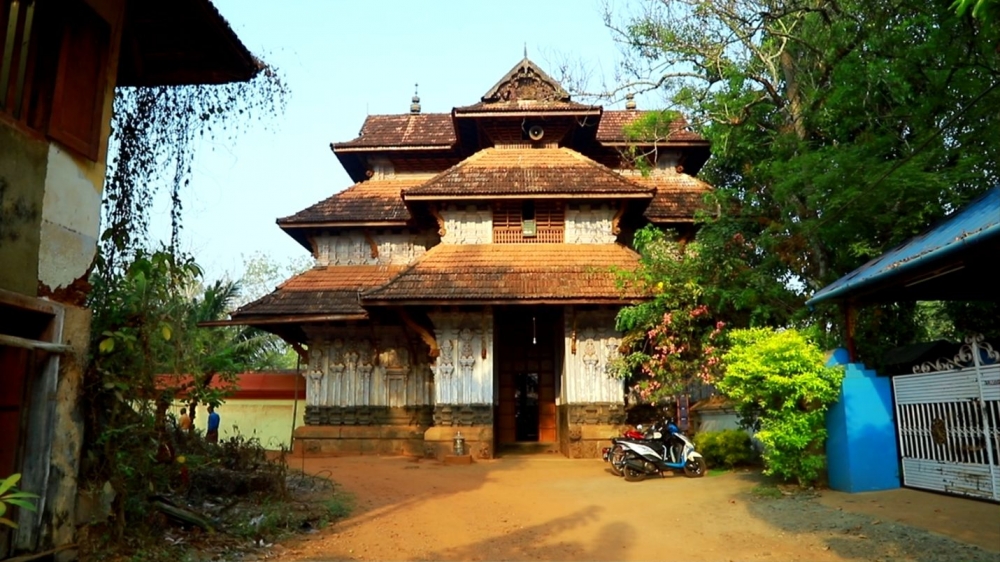
This temple is inextricably linked to the legend of Sundara Murthi Nayanar (also known as Sundarar), one of the four great Saiva Acharyas. As per the Periyapuranam, the saint is believed to have ascended to heaven from this very place. The legend narrates that on the auspicious Adi Swathi day (falling in the month of July/August), Lord Shiva sent a magnificent white elephant to carry Sundara Murthi Nayanar to Mount Kailash. He was followed by his close friend, the Chera King Cheraman Perumal Nayanar, who rode on horseback. The divine departure inspired Sundarar to sing a special Padhigam (a set of ten verses) to Lord Shiva, which, upon the saint’s request, was miraculously sent back down to Thiruvanchikulam, cementing the temple’s eternal association with the event. Indeed, images of both Sundara Murthi Nayanar and Cheraman Perumal Nayanar can be seen within the temple premises today. The spiritual link is so strong that the temple is often associated with the famed Chidambaram temple in Tamil Nadu, a primary center of Saivite pilgrimage.
Historical Resilience and Royal Patronage
The location of the Thiruvanchikulam Siva Temple was once the beating heart of a powerful empire. The capital city of the Kulasekharas, Mahodayapuram, was strategically built around the temple complex. This capital was protected by high fortifications on all sides and featured extensive pathways and palaces, highlighting the temple’s central role in the political and religious life of the Chera kingdom.
However, its wealth and prominence made it a target for invaders. The Thiruvanchikulam Siva Temple was tragically attacked and damaged during Tipu Sultan’s invasion of Kerala in the late 18th century. Historical accounts indicate that the copper roofing and valuable gold and jewels were brutally looted. The Muslim soldiers were only forced to flee the temple complex upon the arrival of the Travancore Army, led by the astute Dalawa Keshavadas Pillai. Following the destruction, the temple was lovingly rebuilt and restored by Paliath Achan of the Kochi/Perumpadappu Swaroopam—a family for whom Shiva has historically been the family god. The maintenance and administration of this living heritage is currently carried out by the Thiruvanchikulam Devaswom under the Cochin Devaswom Board.
Rituals, Festivals, and Daily Worship
Worship at the Thiruvanchikulam Siva Temple adheres to ancient tradition. Four daily rituals are strictly followed, supplemented by three major yearly festivals. The most prominent and celebrated of these is the ten-day Vaikasipournami Brahmotsavam festival, which is celebrated during the Tamil month of Vaikasi (corresponding to May–June). This festival draws thousands of devotees and is characterized by elaborate processions, traditional music, and dance forms, providing a spiritual spectacle that lasts the full day during the festival period. Outside of festival days, the temple remains a beacon of faith, open from 4 am – 12 pm and again from 4 pm – 8:30 pm. The enduring tradition, the captivating art, and the sacred history combine to make the Thiruvanchikulam Siva Temple a peerless destination for art lovers and devout pilgrims alike.